Why Olympics 3-on-3 overtime has some saying it is not hockey
The NHL season has resumed after the Olympic break and if a game is tied after 60 minutes, there will be a 3-on-3 overtime, followed by a shootout.
Just like the Olympics.
But when the NHL rolls around to the playoffs, it will switch to a 5-on-5 overtime.
The Olympics doesn’t do that, though. It goes from a five-minute 3-on-3 overtime in the preliminary round, plus a shootout if necessary, to 10 minutes and a potential shootout in the knockout rounds up to the bronze medal. Even though the gold medal game’s overtime lasts for however long it takes for the first goal to be scored it’s still 3-on-3.
‘It’s not a format we would have chosen, but we respect the rules of the tournaments we participate in,’ NHL deputy commissioner Bill Daly told USA TODAY Sports.
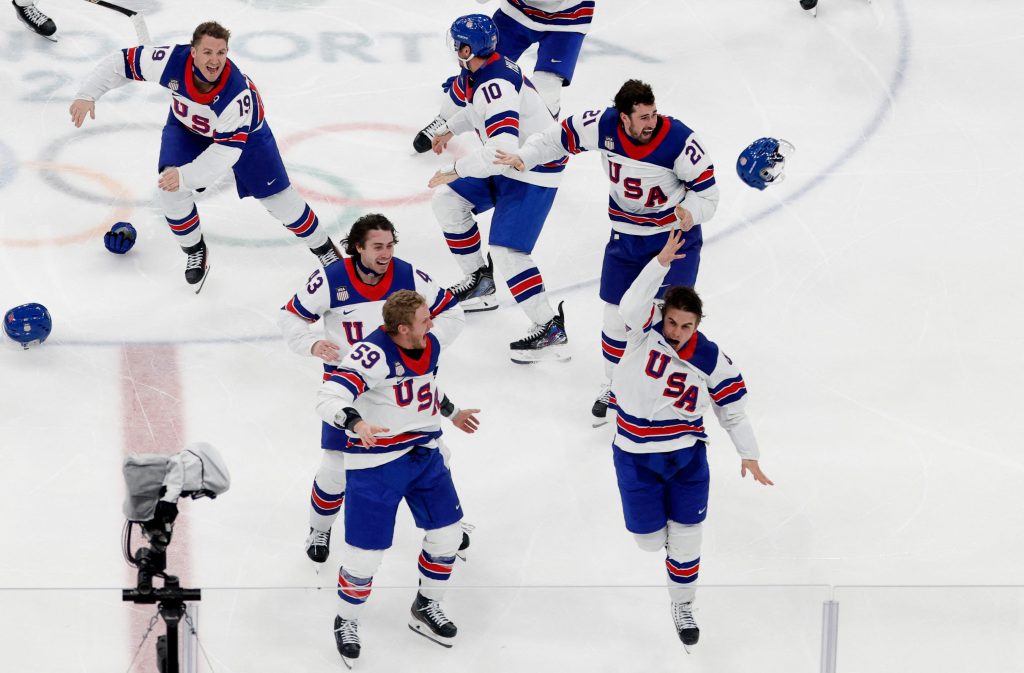
When Jack Hughes scored in the Feb. 22 gold-medal game to give the USA its first gold since 1980, it was done at 3-on-3.
‘You take four players off the ice, hockey’s not hockey anymore,’ Canada coach Jon Cooper said after that game. ‘There’s a reason overtime and shootouts are in play. It’s all TV driven to end games. So there’s not a long time. There’s a reason it’s not in the Stanley Cup Finals or playoffs because it gets ended in five.’
He backtracked later in the news conference.
‘All the teams know the rules going into these beforehand. So you can’t come up here and say we’re the losing team because we lost in a 3-on-3 and that’s not fair,’ he said. ‘We knew the rules coming in. We won a game in this tournament 3-on-3 (against Czechia), so that’s not the way it is.’
Here’s a look at the impact of 3-on-3 overtime at the Olympics:
Why was 3-on-3 overtime adopted?
The NHL has been using 3-on-3 (changed from 4-on-4) in the regular season since 2015-16 in an attempt to cut down on the number of games that go to a shootout.
It’s incumbent early in the Olympics to have games not last forever because up to three games a day are played at the same arena.
The International Ice Hockey Federation kept a shootout for all games until recently, and a few gold medal games went to a shootout. The 1994 Swedish men’s team won on the famed Peter Forsberg move. The 2018 USA women’s team beat Canada in a shootout. Overtime was played at 4-on-4 in that year and the 2010 gold medal overtime won by Canada.
‘The IIHF has tried various formats over the years – some years ago it was decided to align all overtime formats into (3-on-3) and as such it was also used for the Olympics,’ said IIHF spokesperson Noémi Villamarin.
When did 3-on-3 overtime start at the Olympics?
The 2022 Olympics were the first to use 3-on-3 overtimes and to drop the shootout for the gold medal game.
The NHL originally was scheduled to send players to the Beijing Games but backed out to make up league games postponed by COVID.
Despite the 3-on-3, three men’s games went through a full overtime to a shootout, including the USA’s loss to Slovakia in the quarterfinals and Russia’s semifinal win against Sweden. Two preliminary round games were settled in overtime, one after two minutes and the other after four minutes.
Overtime at the 2026 Olympics
The 3-on-3 overtime in 2026 drew notice because NHL players – and therefore elite skill – were on the ice for the first time since 2014.
There were five overtime games in the men’s tournament and no shootouts. One was in the preliminary round, three in the quarterfinals and the one in the final. The women’s gold- and bronze-medal games also went to overtime.
The longest men’s overtime lasted 3 minutes, 27 seconds when the USA’s Quinn Hughes, Jack’s brother, scored to defeat Sweden in the quarterfinals.
‘That’s as nervous as I’ve been ever in a hockey game,’ said Dylan Larkin, who had scored in regulation. ‘Just the way 3-on-3 goes, it’s really just being opportunistic. Someone could fall, some puck could bounce, anything could happen, especially with the ice out there.’
The USA took advantage the wider-open ice of 3-on-3 in the gold medal game. Jack Hughes pushed the puck past Canada’s Cale Makar, Zach Werenski fought off a defensive play and fed Hughes for the winning goal at 1:41.
‘It’s still skilled players out there making skilled plays,’ Cooper said. ‘And the U.S. team has some skilled players – as do we. They made one more play than we did in overtime.’
What’s next for best-of-best hockey overtime?
The 2025 4 Nations Face-Off was the start of a commitment of the NHL to best-on-best international tournaments.
‘The 4 Nations Face-Off was our tournament with our rules,’ Daly said.
A 2028 World Cup of Hockey is in the works. The NHL also has committed to send its players to the 2030 Winter Olympics in France.
Could there be a change in the overtime format before then?
‘The IIHF is continuously evaluating all aspects of the game, also the OT format and will make decisions accordingly,’ Villamarin said.