Peep the sheep helping Team USA stay warm at Olympics opening ceremony
MILAN — Princess and Peep. Pyeong and Chang. Sochi.
This isn’t a nursery rhyme, or a trip down Olympic memory lane. They’re the names of some of the top sheep behind the wool that’s on full display at the 2026 Winter Olympics for Ralph Lauren’s Team USA collection. Of which, you can trace directly back to the American West.
‘It’s such an honor. It’s humbling, it’s exhilarating — all at the same time,” said Jeanne Carver, founder and president of the Shaniko Wool Company, which has been a sustainable supplier of wool to Ralph Lauren for its Team USA uniforms since 2014.
‘I hope they feel that they’re wrapped not only in wool, but the love of the nation.’
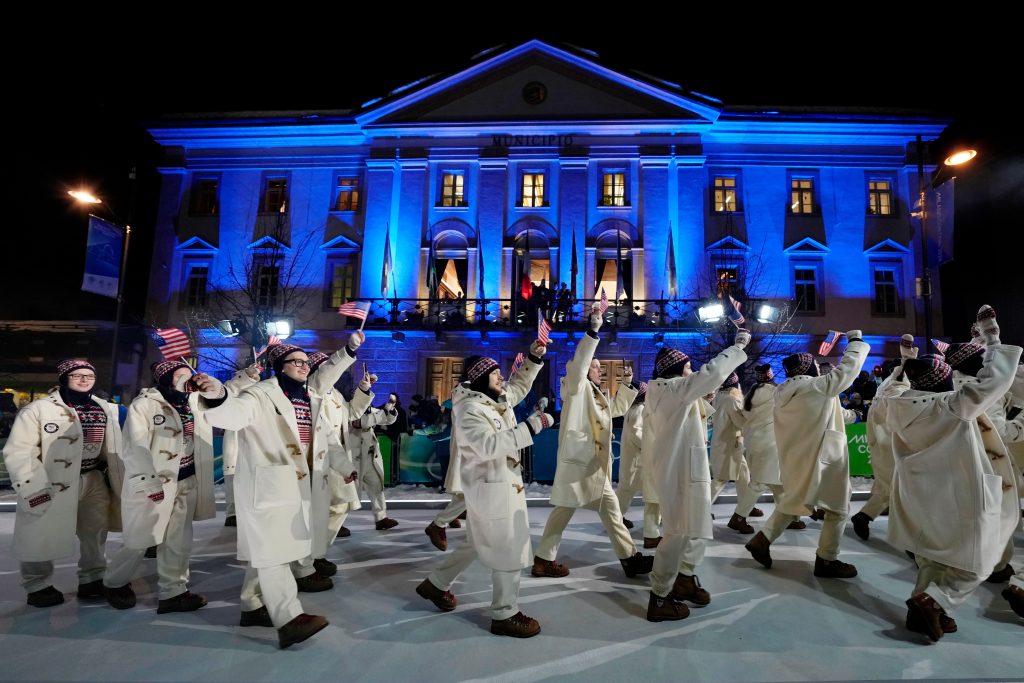
The Ralph Lauren x Team USA Olympic collection bypassed fancy fashion innovations, like heated jackets. Instead, opting for all natural, tried-and-true wool for their coats, pants, hats, mittens and sweaters. The clothing company uses a range of local US manufacturers and materials providers to create the looks.
“And they’re warm,” snowboarder Red Gerad previously told USA TODAY Sports. ‘A lot of times people forget that even though it’s the opening ceremony, it’s the Winter Olympics. Really cold.’
Susan Sokolowski, professor of product design at the University of Oregon, described the style of the uniforms as Americana with a classic twist.
“We are really respecting the home country and city of Milan through this beautiful fashion, stealth white execution,” she said.
Sokolowski also pointed out the toggle button, which has its roots with maritime and military designers tasked with creating a “functional garment that can open and closed with gloves.”
“If we can make them look great in Italy, we’ve scored,” Ralph Lauren chief branding and innovation officer David Lauren told USA TODAY Sports in December when the uniforms were revealed.
So what makes wool work so well, especially in a world of new material and synthetics?
‘It regulates temperature naturally, which is really interesting,” Sokolowski said. “Not many other fibers can do this.”
But that’s not all: Wool doesn’t pick up odors and it’s elastic and breathable. It’s even fire-resistant.
For those reasons and more, it’s been the go-to for centuries, with athletes in the Ancient Olympic Games awarded a taenia — a red woolen ribbon that would be tied around the winners’ heads. Back then, the athletes went all natural, competing completely naked.
But in the modern-day Olympics, wool has been a common denominator in clothing, remaining this way through the World War II era, when invention resulted in material that was even lighter and had more stretch.
But modern-day athletic apparel ‘leach microplastics and they’re not great for the environment,’ Sokolowski said. ‘So, moving to wool or cotton — or other sort of plant-based and animal-based fibers — I think we’re going to see more of that.
‘It’s really around sustainability, but also, how can we harness the greatness of these fibers?”
That’s what Carver’s work is all about.
‘We’re bringing a direct connection to us, to the people on the land who are still doing the work of ranching,’ Carver said.
Still, each Olympics are an opportunity for innovation, whether in athletic style or build. And that’s one of the things that she looks forward to with each Games.
‘As a designer and someone who works in product innovation, I love how the Olympics, the summer or winter really, is a milestone for inventors that work in the space to really move and show new ways of fashion that we’ll see in opening ceremonies,” she said.
For Carver, she loves seeing athletes decorated in her wool. She’s even hosting an Olympics watch party for the first time, where guests can try on the uniforms in her personal collection.
‘We’ll never be on an Olympic stage,’ Carver said, of herself not her wool. ‘But we will certainly be cheering them on.’