MLB’s ‘robo umps’ for 2026 create a whole new ballgame
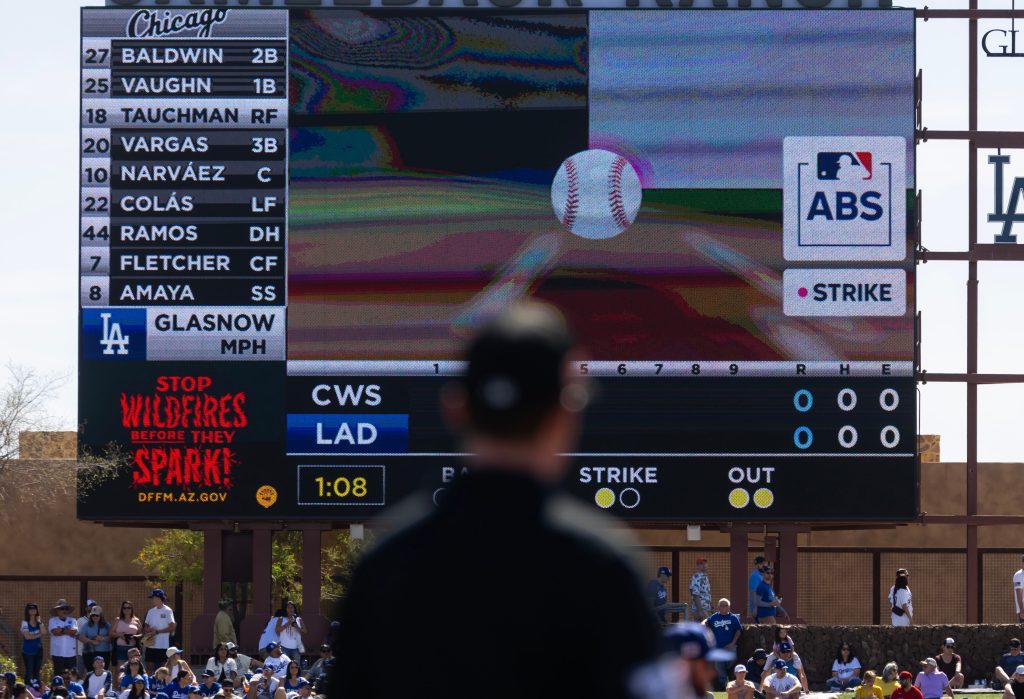
SCOTTSDALE, AZ — Bring on the robots, tap your helmet if you disagree, and tell your analytic department it better preparing be for a whole new wave of research.
The automated ball/strike system is here for the first time in Major League Baseball, and general managers, managers and coaching staffs have already begun to strategize the best way to capitalize on a new way to challenge authority.
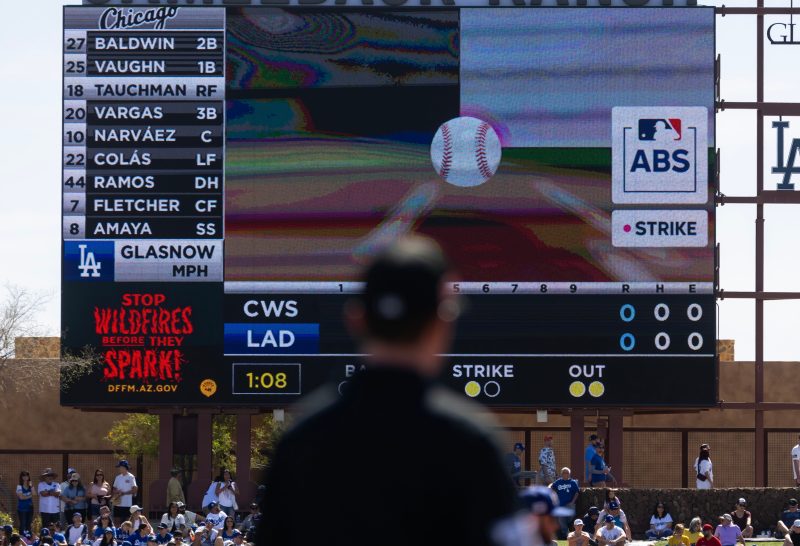
If the pitcher, catcher or batter disagrees with a ball or strike call, they have the right to challenge the umpire, with everyone in the stands able to see who was right with a graphic on full display on the scoreboard.
Teams get two challenges per nine innings, and as long as you’re proven correct, you can challenge as many times as you wish.
If you’re wrong twice, you’re out of challenges unless the game goes into extra innings.
The only players permitted to challenge are the pitcher, hitter and catcher and pitcher, and it must be issued within two seconds of the pitch being thrown, signaled by tapping your helmet.
If you blow through your challenges early, you won’t have the right to correct an errant call in the ninth inning. If the game goes into extra innings, each team will be provided one challenge in each extra inning.
So, the question for every manager now is who will be permitted to challenge, at what stage of the game, and under which circumstances.
“All I know is that we won’t let our pitchers challenge,’ Cincinnati Reds manager Terry Francona said. “They think everything is a strike.’
Francona laughed, but it’s certainly a sentiment shared by several managers in interviews Thursday, with most saying they would leave that up to their catchers and hitters.
But, of course, not every hitter.
“We’re going to have a lot of conversations about that,’ Los Angeles Dodgers manager Dave Roberts said. “I do think there’s going to be a strategy that comes with it. What that looks like, I don’t think I know right now, but we’re going to encourage conversations as far as leverage, when you use it, when not to, who should, who shouldn’t.’’
So, who has been told they can’t use it?
“I don’t want to say because they’ve already been sensitive when I brought it up,’ Roberts said. “So, I’m not going to name-call right now. I’m not going to say any names but I don’t think that there’s a self-evaluation on who knows the strike zone, who doesn’t, who gets emotional, and understanding everything.
“I’m in favor of it.’
Says Francona: “We don’t have a strategy in place because we want to kind of see how it plays out. I’ve already talked to some of our player development people to ask them how they did it, and then we’ll formulate a strategy and try to do it better than other teams like everything else.
“But I think it’s going to be OK.’
In research by MLB, there were four challenges per games at the Triple-A level last season with about a 50% success rate. The most challenges, 3.5%, were utilized in the ninth inning.
“You want to have one late in the game, just in case,” Arizona Diamondbacks manager Torey Lovullo said. “The top of the first inning on a 0-0 fastball, I don’t want to challenge and lose. We’ll most likely rely on catchers first. Pitchers at times get a little emotional. Hitters can be that way sometimes, too. I think we’re going to rely on the catchers.
“But I want to have one in pocket, when I can, when it’s in a critical part of the game.”
It will be a strategy that will be implemented by teams in spring training, and tweaked throughout the year, with plans constantly being modified on when it should be best utilized.
“We’re going to do some experimentation over the course of the spring,’ said Los Angeles GM Perry Minasian. “We’ve had some staff members that have been more familiar with it than others in the minor leagues, so we’re just going to see how it evolves and how it goes.
“I’m sure every team has had conversations about it and undergone studies. We’re going to get as many different opinions and viewpoints as we can get get. We’ll go through all of the types of things through the course of spring training. I’m not one for a steadfast rule who can use it and who can’t, but I think there will be a certain component of earning the right to do it, who’s capable of doing it and who’s not.
“And I’m sure there will be adjustments made throughout the course of the year. What we may do in April may be different in May, different in June, different in July. It’s going to be one of the unique things about this season.’
The ABS will add about one minute per game, according to MLB’s research, with each challenge averaging 13.8 seconds. The strike zone is also expected to slightly shrink, according to Joe Martinez, MLB’s vice president of on-field strategy. Each player will be measured by height this spring, with strike zones starting at 53.5% of a batter’s height at the top and 27% of a batter’s height for the bottom of the zone
There will be some glitches at times. There were 291 pitches that were untracked out of the 88,534 pitches last spring, according to MLB’s research. And if the computer system malfunctions, the umpires will again have the ultimate authority.
There will also be times when a team asks for instant replay on the field at the same time as a challenge. In that case, the umpires will determine the instant replay result before the challenge is assessed and be given discretion on plays that on the bases that could be impacted by challenges.
The challenge system will not be in effect when a position player is pitching in a game.
MLB also announced that the base coaches must remain in their coaching boxes until a pitch is delivered, hoping to eliminate sign stealing. It also tweaked its obstruction rule so that a runner who initiates contact with a fielder trying to draw an obstruction call will now be called out.
Play ball, and keep those computers churning.
Follow Nightengale on X: @Bnightengale