MLB team can’t keep Cy Young winner, so they signed another ace
The Detroit Tigers are well-positioned to triumph in the land of the indifferent.
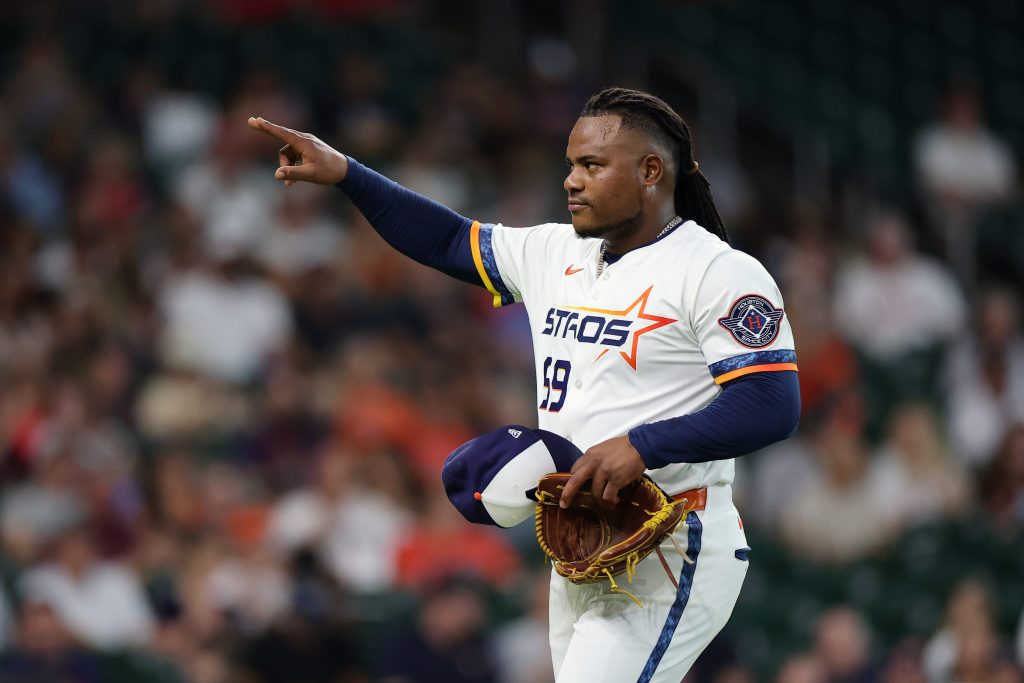
All it took was one handshake with Framber Valdez and a short-term commitment to the left-hander to ensure the 2026 Tigers will be significant favorites in the American League Central, where five teams worth a combined $8 billion typically engage in an annual ritual of seeing who can do less.
The Tigers decided to zag: While the modern fan has been conditioned into the loser mindset of ‘you better trade a guy before you get nothing,’ Detroit instead took the more appropriate tack of surrounding Tarik Skubal with another elite arm in his almost certainly final year in Motown.
And they even locked up a replacement when he walks. Novel, isn’t it?
In signing Valdez to a three-year, $115.5 million contract, the Tigers immediately trot out the AL’s most dominant 1-2 punch, a duo perhaps rivaled in Boston or Toronto or Seattle but still can’t match the raw dominance of possessing the game’s most dominant pitchers and also one of its rocks.
Skubal won his arbitration case against the Tigers, earning a $32 million salary compared to the Tigers’ $19 million bid. His greatness is well-documented. Valdez’s is a little sneakier, his greatest value coming in the 180 to 200 excellent innings he typically provides every season. Lest we forget, he was the lead blocker in the 2022 Astros’ push to the World Series title, going 3-0 with a 1.44 ERA, the Astros winning all four of his starts.
Certainly, a late-season kerfuffle involving his catcher might have dampened his value on the market a tad, but that’s the Tigers’ gain. And besides, his $38.3 million deal is still the largest per annum for a left-handed free agent.
You’d think stretching for a free agent prize might be out of the Tigers’ realm. Then again, memories are short, and baseball’s bean counters seem to like it this way.
This is a franchise that once extended future Hall of Famer Justin Verlander on a $202 million deal and also fellow Cooperstown lock Miguel Cabrera on a $292 million pact. Amid all that, they saw fit to sign free agent pitcher Jordan Zimmermann to a five-year, $110 million deal.
That came in November 2015. Have baseball’s revenues increased since then? (Don’t answer that).
The Tigers played the Verlander situation perfectly, trading him when they realized a down cycle was imminent. And unlike Skubal, Verlander had two to three years of club control remaining when he was dealt to Houston.
Detroit’s franchise-altering return haul? Franklin Perez, Daz Cameron and Jake Rogers.
While Tigers owner Chris Illitch is not nearly as win-now as father Mike once was, the basic fact remains: A dollar goes a long way in the Central. This is a division where the biggest-market team (Chicago) has never spent more than $75 million on a free agent, where Cleveland likes to pretend any star unwilling to sign a below-market extension must hit the trading block after three years, where Kansas City will nip around the edges until strong-arming any municipality that will have them into a new ballpark, where Minnesota takes on new investors and rotates family members as ‘control people’ and overturns its front office as if it doesn’t have the greatest ballpark in the division.
No, opportunity is ripe and as we know, consistent access to the playoffs is the most important piece to winning a World Series. Signing Valdez – who can opt out of his deal after the 2027 season – and pairing him with Skubal almost guarantees the Tigers an October ticket, and a favorable set-up when they get there.
Even if it’s just one year, what an opportunity. And the Tigers can always come back and reassemble after Skubal leaves. The door should still be left wide open.