‘He’s not going to go to prison.’ Legal experts examine Sherrone Moore case
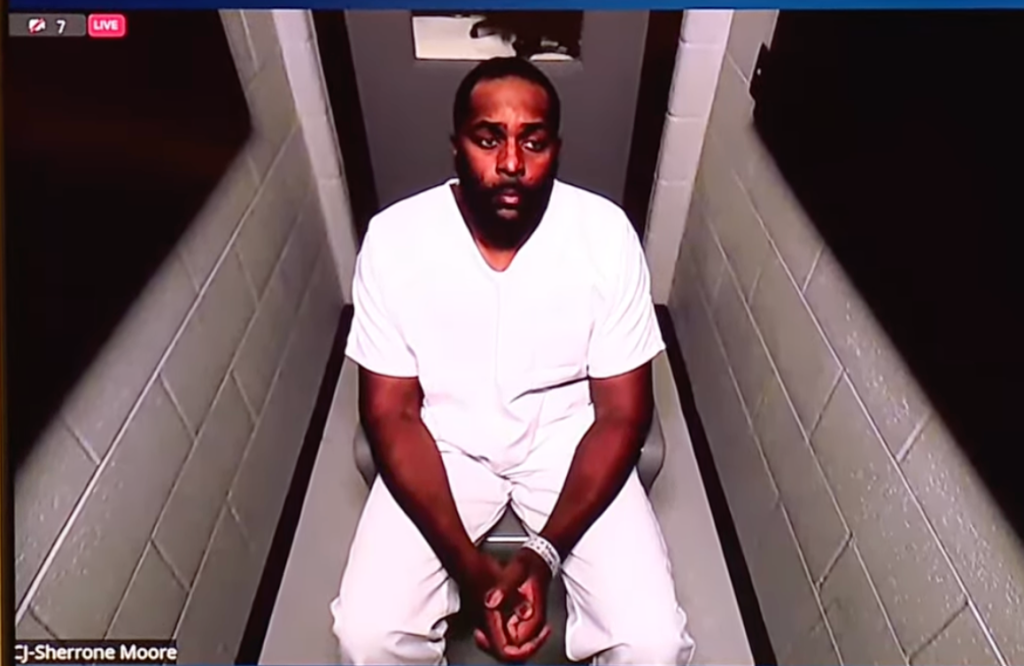
- Former Michigan football coach Sherrone Moore faces a felony home invasion charge, which carries a maximum penalty of five years in prison.
- Legal experts suggest that Moore is unlikely to serve prison time, even if convicted, and could have faced more severe charges.
- Moore is accused of forcibly entering a woman’s apartment, grabbing butter knives and scissors, and threatening to kill himself.
Every felony is serious: The one ex-Michigan football coach Sherrone Moore faces comes with a maximum penalty of five years in prison.
A final outcome in the case is far from certain. But legal experts who analyzed the charges against Moore said even if he takes a plea or is found guilty of the most serious charges he’s unlikely to go to prison.
In fact, one lawyer said Moore should breathe a sigh of relief prosecutors did not levy more serious charges, given a court record indicates a woman told police he pointed butter knives at her and backed her toward a separate room.
‘I think he’s fortunate they didn’t charge this with a Home Invasion 1 and Felonious Assault,’ said Scott Grabel, a veteran criminal defense lawyer based in Ann Arbor.
Moore is accused of forcibly entering the Ann Arbor-area apartment of a woman with whom he had a two-year affair on Dec. 10, shortly after the University of Michigan fired him. Once inside, law enforcement and prosecutors say he picked up butter knives and kitchen scissors, at some point threatening to kill himself. He then left, was arrested Dec. 10 and formally charged Dec. 12.
Prosecutors have wide discretion as to how they charge people: That means the exact same set of circumstances could yield very different charges filed by prosecutors in two different counties.
If the exact same thing Moore is accused of doing happened in a different county, Grabel said it’s highly likely Moore could be charged with first-degree home invasion, a felony that carries a maximum of 20 years in prison.
Instead, Moore faces third-degree felony home invasion, misdemeanor stalking and misdemeanor breaking and entering. Given the nature of these charges, Grabel and other lawyers told the Detroit Free Press the two nights Moore spent in a Washtenaw County jail could be his last behind bars on this case — even if he’s found guilty or takes a plea.
Grabel stressed he is not criticizing Washtenaw County Prosecutor Eli Savit. In fact, he praised Savit for, in his view, showing prosecutorial discretion and not overcharging.
‘(Savit’s) job is not to get the highest conviction. It’s to look at the circumstances, and make a determination: What do I believe, with the law and the circumstances, do I think are appropriate charges that protect the community (and) are appropriate under the totality of the circumstances?’ Grabel said.
‘That’s where one county could charge A, one county could charge B. Just like with plea bargaining, one could give you an offer, one would say I would never give you an offer that good. Nobody did anything wrong here.’
In a statement Dec. 13, Savit said as of late last week there was not enough evidence to prove Moore intended to assault the woman. However, he noted the prosecutor has the power to change or increase charges ‘as new evidence comes in.’
After Moore’s initial court hearing, his lawyer Joseph Simon said he needed to review additional evidence before commenting on the charges and the case.
On Saturday, though, Simon answered a Free Press question as to why he thinks his client was not charged with assault.
‘Your question highlights the need to first obtain and review all evidence against every element of the charged offenses before making speculative comments or conclusions and that is what we intended to do,’ Simon wrote in a text message.
Grabel and Arther Weiss, a defense lawyer in metro Detroit, reviewed the complaint against Moore and information shared publicly by prosecutors and police. Both noted every case is unique, with nuances and details that will affect what ultimately happens to Moore.
They also cautioned it’s always difficult to predict what exactly will happen in a case; prosecutors and law enforcement may have more details they have not released and new information could come out at any moment that may help or hurt prosecutors or Moore.
If this were any other defendant and everything else was the same, though, Grabel and several other lawyers with whom the Free Press spoke agreed probation would be the ultimate outcome in the case.
“He’s not going to go to prison, his guidelines are probationable,” said Todd Flood, managing partner at Flood Law PLLC and a former Wayne County assistant prosecutor.
‘The guy has spiraled out of control, he had a lot of issues that led up to this and he needs counseling more than anything. The other thing is you’ve got Eli Savit, he’s a prosecutor who looks at resolution from a global standpoint, and an equitable resolution in most cases in this jurisdiction is going to be how does he rehabilitate Mr. Moore and send a message at the same time that there’s consequences for his actions.’
Moore is perhaps the most well-known man in Ann Arbor and certainly one of the more famous people in the state. Until very recently, he had power, influence and attention. In theory, that shouldn’t matter. In practice, it might, said John Freeman, a Bloomfield Hills defense lawyer and former prosecutor.
‘You can try to look at the case in a vacuum, but there’s just no way of doing that. He is who he is, he’s got the notoriety and public profile that he has,’ Freeman said.
‘That undoubtedly will be something that’ll be taken into consideration.’
Right now, the public — and to some degree, Moore’s lawyer, Simon — largely only know information provided in court or to the media by police and prosecutors. Grabel noted prosecutors are required to provide Moore’s team with the evidence they have in the case. As of late last week, Simon said he had yet to receive body camera footage cited by prosecutors.
That evidence should show not only what happened in that apartment, but offer a glimpse into why prosecutors did not push for a more severe charge.
‘Assuming that the complaining witness is OK with it, then I think probation is highly likely as an outcome,’ Freeman said.
‘Especially if there was no threat of serious physical injury or death. But it is concerning that he is alleged to have forcibly entered into the location. That definitely changes the dynamic, and makes it far more serious, especially because she was at home.’
Degrees of home invasion
Kati Rezmierski, first assistant prosecutor for Washtenaw County, told a magistrate on Friday, Dec. 12: ‘I understand that there isn’t evidence to suggest that (Moore) directly threatened the victim’ with butter knives or kitchen scissors.
However, a detective with the Pittsfield Township Police Department told the same magistrate during an earlier hearing the woman said Moore did point the knives at her.
‘She advised that she began backing up and as he was approaching her (the woman) advised that Moore grabbed two knives out of her drawer and pointed them at her, saying, ‘You ruined my life. You ruined my life,” the detective told the magistrate, according to a transcript of the hearing.
‘(The woman) advised that she continued to back up, telling him to leave, and he continued towards her with the knives, backing her towards the living room.’
Moore denied assaulting the woman or threatening her with any weapon when asked by police, a court record shows.
Both lawyers said it’s important to note prosecutors charged Moore with third-degree home invasion, not first-degree. First-degree home invasion comes with a maximum 20-year prison sentence, but also requires proving the person committed assault or some other very serious crime in addition to breaking into a home.
Originally, when asked about Moore, Pittsfield police told media they responded to an apartment, ‘for the purposes of investigating a reported assault.’ But Moore was not charged with assault.
‘In my experience, I’ve seen them charge much more serious charges on less egregious facts,’ Grabel said.
Weiss said while prosecutors could have charged Moore with first-degree home invasion, it may have been too difficult for them to prove he had a specific intent to assault her when he entered the apartment.
‘They’re butter knives,’ he said. ‘Are you going to be able to get a jury to believe beyond a reasonable doubt that when he took out the butter knives he intended to scare her into reasonably believing she would be assaulted?
‘He’s got to have the intent to … at least threaten her with harm, so her being afraid with the butter knife is not enough — he’s got to have that intent.’
Ultimately, the testimony of the woman Moore is accused of attacking is crucial for any of these charges. Absent in-home cameras or a confession from the person accused, Grabel noted prosecutors frequently pursue first-degree home invasion based largely on statements from the person allegedly attacked.
Under third-degree home invasion, prosecutors only need to prove Moore committed a misdemeanor after breaking into a home. In this case, the listed misdemeanor is stalking.
Messages and consent key, lawyers say
Grabel said it’s crucial to understand how prosecutors plan to prove the stalking. Police told the court the woman reported receiving roughly a dozen calls and an unknown number of text messages after she ended the relationship with Moore earlier in the week, according to records.
On the third-degree felony home invasion, prosecutors must prove Moore intended to or did commit a misdemeanor — in this case, stalking — while at the apartment without permission.
‘Usually stalking is not a single episode. There’s got to be a course of conduct under the statute: more than one thing. If you don’t have the stalking, you don’t have the felony home invasion,’ Grabel said.
In order to show the course of conduct, he explained prosecutors would need more than one email, text message or other communication from the woman telling Moore to leave her alone.
‘If you fight the stalking, and there’s a weakness in the stalking, there goes the felony,’ Grabel said.
Weiss said how prosecutors prove Moore did not have consent to enter the apartment of the woman with whom he had an affair is also important.
Prosecutors do not need to prove Moore physically broke down the door, only that he used force to enter the residence and did not have permission to come inside. Under the law, the act of opening the door counts as force.
But Weiss noted, if Moore’s habit was to enter without knocking because he’d previously been given permission, that could factor into the home invasion charge.
‘For the purposes of a case, if the jury wants to believe it — simply her telling him you can’t come in or not answering the door is probably enough,’ he said.
‘But on the other hand, if … they had an intimate relationship for any period of time and he would come over all the time (because) their course of conduct is, ‘I can enter, I don’t have to wait for someone to open the door for me because if I’m coming over there’s permission,’ it can be a jury’s determination that they’re going to believe beyond a reasonable doubt that because of their relationship and course of conduct or habit that the non-live-in person had permission to come in.’
However, there is still a chance prosecutor bring more serious charges. Frequently, Grabel said prosecutors try to work out a deal with defense lawyers. If the defense lawyers agree to voluntarily forgo a critical early hearing that’s used to establish where there is enough evidence for the case to go to a hypothetical trial, then the prosecutors agree not to up the charges.
But, if the defense disagrees and says they want to hold that early hearing, prosecutors can say they will push for harsher charges at that time.
This is not a situation unique to Moore, and it isn’t necessarily happening in his case. But Grabel explained it’s a possibility that isn’t uncommon, one that presents a calculated risk to both prosecutors and the defense.
Prosecutors offer timeline of events
During the Friday hearing, Rezmierski walked through a brief timeline of events, providing additional details about the actions that prompted the charges against Moore.
Rezmierski said on Dec. 8, the woman with whom Moore had a roughly two-year affair ended their relationship. Moore, a 39-year-old married father of three, tried repeatedly to contact her, Rezmierski said. The woman did not respond, she said.
The Free Press generally does not identify people described as domestic crime victims without their consent.
At some point after this, Rezmierski said the woman provided evidence of their relationship to Michigan athletic officials. Athletic department leadership fired Moore for cause on Dec. 10.
After his firing, Moore allegedly drove to the woman’s apartment and ‘barged his way into that apartment,’ Rezmierski said. Court records show the woman’s lawyer, Heidi Sharp, called police. A detective quotes emergency dispatch, indicating Sharp said Moore was at the apartment attacking her client and he has ‘a long history of domestic violence’ against the woman.
This alleged history was not mentioned in court Friday.
A Pittsfield Township police news release states he entered through an unlocked door without permission. Police and prosecutors say an argument ensued; Moore allegedly grabbed butter knives and pair of kitchen scissors and threatened to hurt himself.
‘I’m going to kill myself. I’m going to make you watch. My blood is on your hands. You ruined my life,’ Rezmierski said in court Friday, quoting what Moore is accused of saying at the woman’s apartment.
‘A series of very, very threatening, intimidating, terrifying quite frankly, statements and behaviors there in that apartment.’
Ultimately Moore did not hurt the woman or himself before leaving the apartment, prosecutors and police say. But she told police after Moore left that she ‘has never been more terrified in her life,’ a court record states.
“While I understand that there isn’t evidence to suggest that he directly threatened the victim with any of those implements that I’ve indicated, the totality of the behavior is highly threatening and highly intimidating. She was terrorized, your honor,’ Rezmierski said in court.
Officers with the Saline Police Department arrested Moore shortly after he left the apartment. Simon said during court after Moore’s arrest, he was taken to a local hospital for a mental health evaluation, then taken to the Washtenaw County Jail, where he remained Wednesday and Thursday before being formally charged and posting a $25,000 bond on Friday.
After the hearing, Rezmierski declined to comment.
Reach Dave Boucher at dboucher@freepress.com and on X @Dave_Boucher1.