Discovery offers hope to children with rare and severe epilepsy
Scientists say they have discovered a new condition behind one of the most common genetic causes of severe epilepsy in children.
The condition – named recessive RNU2-2-related neurodevelopmental disorder – leads to seizures and severe developmental delays before children are a year old.
Experts estimate millions of people could be carriers of the faulty gene behind the disorder.
Children with the condition suffer seizures that can cause them to jerk, stiffen, shake and lose consciousness.
It can also take them longer to learn to walk and talk, and sufferers may have significant learning problems.
Researchers from the University of Manchester and Manchester University NHS Foundation Trust analysed changes in several hundred RNU genes in people involved in the 100,000 Genomes Project.
Eighty-four people, including five-year-old Ava Begley from Sydney, Australia, have so far been identified as having the new condition – with many more believed to be undiagnosed around the world.
The Manchester researchers and the Sydney Children’s Hospital Clinical Genetics Team helped link Ava’s condition to the RNU2-2-related disorder.
Ava is non-verbal and has complex neurological symptoms, and suffers frequent seizures due to her severe epilepsy. She used to have 100 to 200 seizures a day, but these are now more controlled thanks to medication.
Her parents said they were relieved to finally have a diagnosis but also sad “in understanding the seriousness of the condition and how rare it is”.
“It gives Ava a name and a place in the medical world, rather than being an unanswered mystery,” they said in a statement.
“It helps us feel that we are getting closer to the starting point of being able to find a cure/treatment, and provides hope that research and awareness may lead to better understanding and support in the future.”
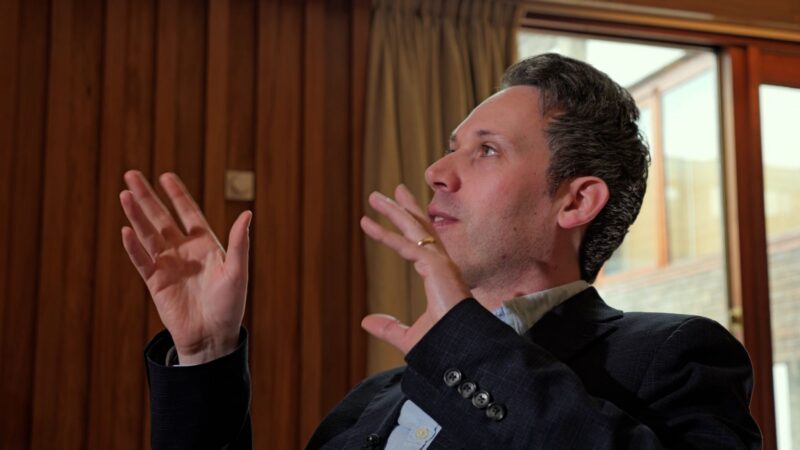
The findings have been published in the journal Nature Genetics and study lead Adam Jackson said it is believed “as many as one in 100 people could unknowingly be carriers of this condition”.
Dr Jackson, from the Manchester Centre for Genomic Medicine, said: “If both parents are carriers, there is a one in four chance with every pregnancy that their child could be affected.
“We estimate roughly one in 40,000 people may be living with this condition, making it one of the most common neurodevelopmental disorders currently known.”
“Unlike most other genes, RNU2-2 does not even make a protein,” Dr Jackson added.
“We were astonished to discover how changes in this tiny gene can have such profound effects in so many individuals.”