Why the World Baseball Classic ‘just gets better and better’
With each passing iteration, the World Baseball Classic gets bigger and bigger – in crowd size, cultural currency and participants.
Yet the world within it keeps shrinking.
As the sixth WBC gets underway this month, the pool play portion of the event will bear faint resemblance to the earliest versions of the event, an apparent marker of its growth and the game’s elevated level of play worldwide:
Closer games. Fewer run-rule victories and shutouts. And the more than occasional upset of a perceived global power.
“Everyone can see that there’s so much talent all over the world,” San Diego Padres and Dominican Republic third baseman Manny Machado tells USA TODAY Sports. “It’s not just here, but all over the world. It means a lot to be the last team standing. I hope it’s us.
“It’s just such a cool event. You’re playing for not just your country, not for the fans, but the people in their countries and across the world. I get goosebumps just talking about it because it’s such a special event.’
The inaugural WBC was a little lighter on goosebumps. Pool play games were contested not in big league stadiums but rather spring training sites, Scottsdale and Lake Buena Vista among the locales to determine quarterfinalists.
And the games were, well, often over before they started.
In 2006, the nine countries and territories that supply the most major league talent – Japan, South Korea, USA, Puerto Rico, the Dominican Republic, Mexico, Cuba and Canada – went a combined 15-0 against less-renowned baseball countries in pool play, with four shutouts and three run-rule wins.
Average score: 9-3, kicked off by Team USA’s 17-0 shellacking of South Africa behind Ken Griffey Jr.’s 4-for-4, two-homer performance.
Yet the gap has been shrinking in almost every WBC since.
Have glove, will travel
In 2009, the less-heralded countries managed three victories in 13 games, including Australia turning the tables and run-ruling Mexico. The Netherlands, powered by a handful of major leaguers hailing from Curacao, scored the first big tourney upset, toppling the mighty Dominican Republic and bouncing them from the tournament.
And suddenly, the average margin of victory shrank from 9-3 to 7-3.
The trend continued through 2013 – when the average score between haves and have-nots shrank to 6-4 – and 2017, when the baseball-poorer countries endured just one shutout. Colombia knocked off Canada and took Team USA to 10 innings, while Australia fell in 10 innings to Venezuela.
China, which lost its first six WBC games against global powers from 2006 to 2013 by a combined score of 64-5, was suddenly playing baseball games in 2017, losing 6-0 to Cuba and 7-1 to Japan.
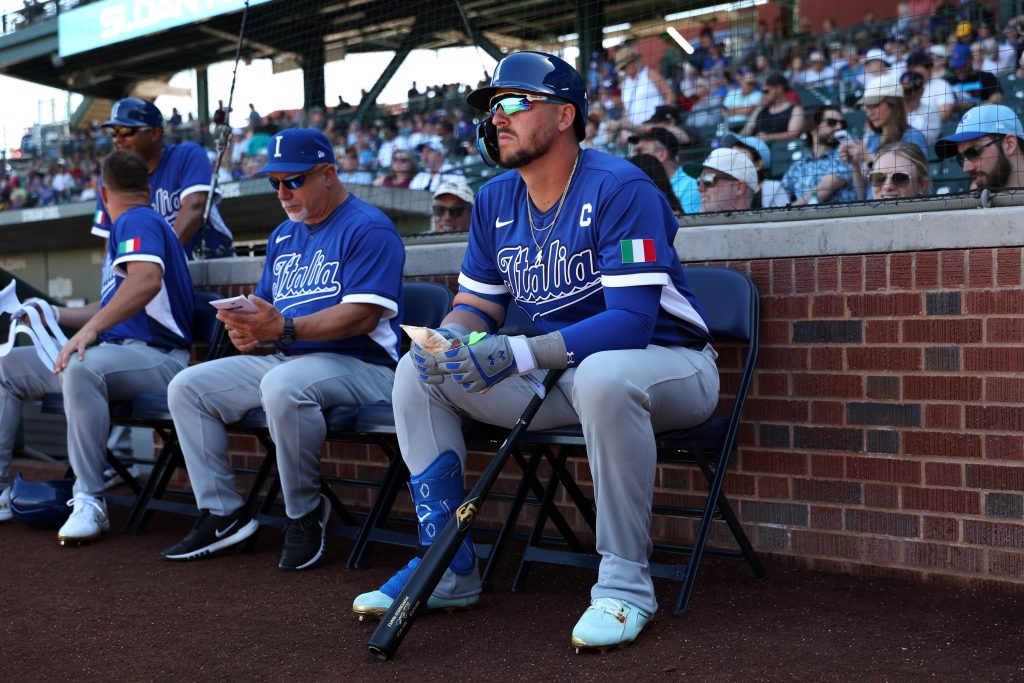
Meanwhile, players are seeing the upside of playing in a global event by representing homelands with which they have strong or even faint connections. Italy this year will feature Kansas City Royals sluggers Vinnie Pasquantino and Jac Caglianone as it aims to repeat – or exceed – its quarterfinal showing from 2023.
Israel, with major league old heads like Sam Fuld, Jason Marquis, Ike Davis and Ty Kelly alongside its “Mensch On The Bench,” made a startling 2017 run to the quarterfinals.
And stars spurned by their country of birth are nonetheless still pining to play. Eight-time All-Star Nolan Arenado, who starred for Team USA in 2017 and 2023, didn’t hear his phone ring this time as a star-studded group of American-born commitments poured in.
Instead, Puerto Rico manager Yadier Molina, his old St. Louis Cardinals teammate, called him up, asking to galvanize a squad beset by injury and insurance woes. Arenado, whose mother Millie is of Puerto Rican and Cuban descent, was all in.
“I didn’t expect (Team USA) to call coming off last year,” says Arenado, who produced a career-low .666 OPS for St. Louis before an off-season trade to Arizona. “I wasn’t going to play this year, but Yadi called me and my mom wanted me to do it.
“I love the tournament. The talent is sick. It just gets better and better.’’
Lurkers in the groups
Expansion may have its limits, however. In 2023, the event grew from 16 to 20 teams, with five countries now placed in the four pools. The giants flexed their muscles and the likes of Nicaragua, Czechia and Israel went 0-8 while getting outscored 66-6.
It made for a stirring back end of the tournament with Team USA surviving Venezuela in the quarterfinals and reaching its second consecutive championship, this time losing to three-time champion Japan. The final out, famously, came on a Shohei Ohtani strikeout of then-teammate Mike Trout.
Soon, we’ll see if the early rounds can again inject some drama into the proceedings. Australia will aim to repeat its first quarterfinal appearance in 2023 but will have to dislodge either Japan or Korea to do so.
Netherlands will aim to disrupt the Dominican-Venezuelan power duo in Pool D in Miami, with Israel also there in a spoiler role.
And Team USA will have to keep one eye on the disrupters in Houston’s Pool B, where Great Britain will deploy nearly a dozen current or former major leaguers – led by Bahamian Jazz Chisholm Jr. – and Italy’s paisan power bats for its third quarterfinal appearance in four tries.
Perhaps the chalk results will rule the day. But it’s likelier things will get a little tighter before the blue bloods move on.
“The WBC is getting better and better,” says Dodgers and Puerto Rico closer Edwin Diaz, “for every team. Look at the USA, they have a bunch of stars in this tournament.
“So that’s something that’s good for everyone.’’