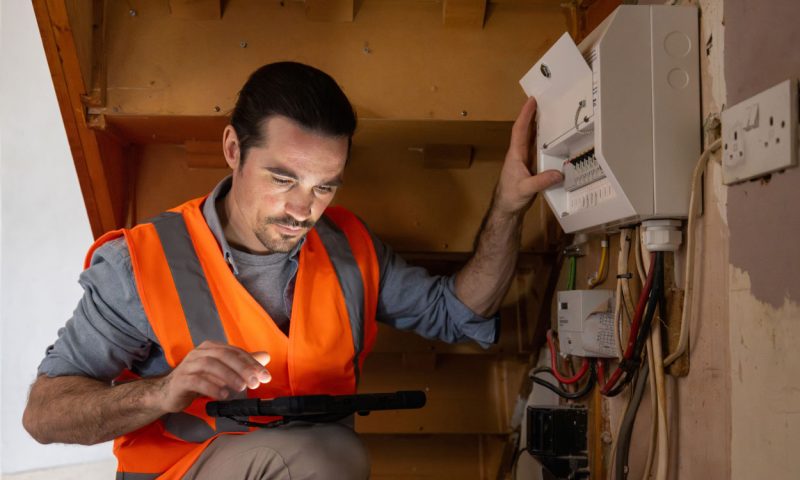
What Is An EICR & Why It’s A Legal Requirement for Landlords
2026 is a big year for landlords. With the new Renter’s Rights Act now passed and each stage of its implementation slowly creeping in, you may well have to switch up your rental practices to stay compliant. Besides the changes taking up the most real estate in the headlines (the abolishment of Section 21 evictions, or restrictions on rent increases), EICRs are getting more attention as their mandatory legal status extends from the private rental sector to cover social landlords too. But what exactly is an EICR? And what does it mean in practical terms for landlords?
In this guide, we’ll be looking into what EICRs are, why they’re seriously important, how to avoid fines of up to £40,000, plus what you should expect throughout the process of getting your own Electrical Installation Condition Report(s) sorted.
TL;DR
- An EICR, or Electrical Installation Condition Report, is a piece of documentation that proves that the electrics in your rental property have been installed safely and correctly by a qualified electrician.
- For landlords of private tenancies, and social landlords come 1st May 2026, the law requires you to acquire a valid EICR for each property every 5 years and follow its recommendations within 28 days to uphold safety standards.
- Landlords should do their due diligence to stay on top of each property to ensure they’re not unknowingly drifting towards a £40,000 fine.

What Does EICR Stand For?
It’s so easy to glaze over when you’re hit by an unknown acronym, especially when it pertains to paperwork. But, as a landlord in 2026, it’s absolutely essential you become familiar with EICRs and follow the legislation around them to the letter of the law. Otherwise, you run the risk of a slap on the wrist and a fine of up to £40,000 from your local council. It also gives tenants the legal right to report you to the authorities.
EICR stands for Electrical Installation Condition Report, and it is exactly that, a written report demonstrating the quality of the electrical installations in a given property. In the past, you may have heard it referred to as ‘fixed wire testing’ or ‘periodic inspection and testing’.
What is an EICR Certificate? The Bare Minimum You Need to Know
An EICR certificate proves the condition of the electrics in a rental property, including wiring, light fittings, socket-outlets, consumer unit (fuse box) and so on.
It’s a formal, standardised document designed to protect the dwelling’s inhabitants and instil best practices up to mandated thresholds of safety (BS 7671). Only issued after a series of detailed checks have been completed by a qualified electrician, EICRs extend well beyond a tick box exercise.
Their objective is to point out whether there are any dangers in the system and suggest appropriate remedial action if serious issues crop up and they’re a lifeline for:
- Legal compliance: From 2021 onwards, the Electrical Safety Standards regulations have meant that possession of a valid EICR for all tenancies is a legal requirement for landlords. This has been in place for much longer (since 2014) for Scottish landowners.
- Tenant safety: A crucial buffer to risks such as electrical fires and shocks, an EICR gives tenants protection and peace of mind that their home is safe.
- Insurance protection: The vast majority of landlord insurance policies require a valid, up-to-date EICR, and without one, they will be voided in the case of an electrical fire.
- Record keeping: EICR certificates also serve as vital proof of condition and evidence that you have met your ‘duty of care’ as a landlord.
- Saving you in the long run: Whether through expensive remedial action or drawn-out tenant disputes, picking up on issues before they become dangerous prevents unnecessary cost and sleepless nights.
What is EICR Testing?
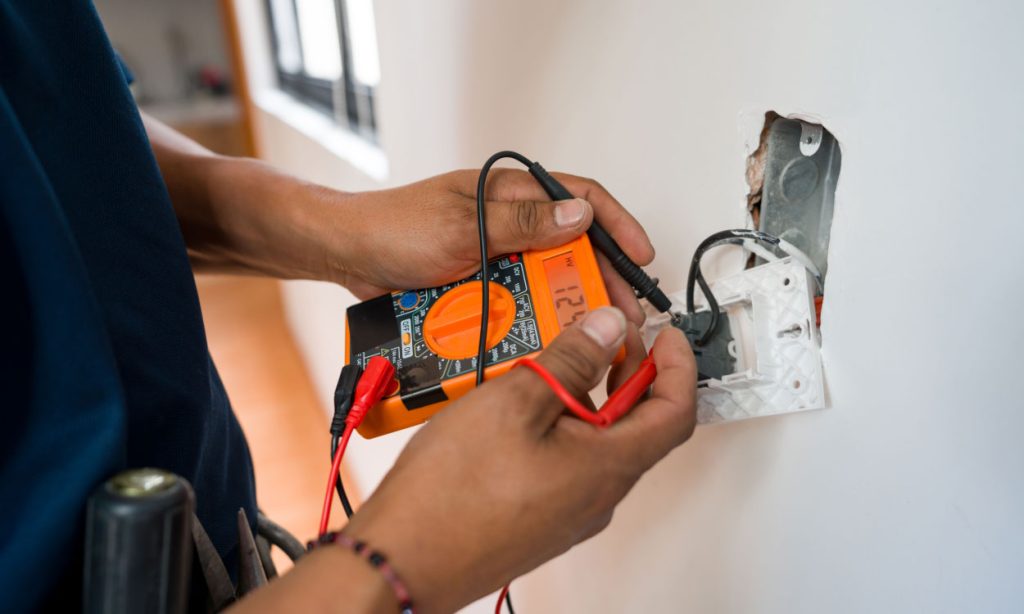
Now, you have a better understanding of what an EICR is, how does the testing work? It typically involves:
- A preliminary visual assessment to spot structural damage, red flags like burning or overheating, obvious issues with wiring, switches and sockets from previous botched jobs, and immediate signs of wear and tear.
- Circuit testing (dead tests) which as done to find faults that demonstrate problems related to earthing, polarity and fault loop impedance, among others.
- Recording the results, setting a deadline for the next EICR, and sharing recommended remedial action for any issues unearthed in the tests with approved software like Napit Fast Test.
Parsing the Results
Fortunately, the outcomes of this electrical safety test are designed to be accessible and jargon-free where possible. A qualified electrician should walk you through their findings and explain your next steps in clear, layperson-friendly language so you know what to do. These observations fall under several categories:
- C1 (Danger Present): Calls for immediate action.
- C2 (Potentially Dangerous): Remedial work is needed.
- C3 (Improvement Recommended): The condition isn’t dangerous but worth improvement.
- FI (Further Investigation): More testing is required.
- Satisfactory: The electrical setup is compliant under regulatory standards.
- Unsatisfactory: The electrics are non-compliant and need prompt remedial action to fix the C1, C2 and C3 infractions observed.
What Electrical Safety Responsibilities Do You Shoulder as a Landlord? How to Stay Compliant
Given the recent introduction of new tenancy regulations across the UK, it’s important you get your legal responsibilities straight, especially if you’re among the 20% of landlords unaware of these latest EICR deadline updates and fines. Failing to comply could result in penalties of up to £40,000.
Which Rented Properties Fall Under the Scope of the Law?
A valid EICR is required for almost all rented residential properties – a rule that has been mandatory in England for new tenancies since July 2020 and all existing tenancies since April 2021. That means Assured Shorthold Tenancies, licences to occupy, HMOs and, come May 2026, social housing also.
Exceptions include:
- Shared accommodation with the landlord or the landlord’s family
- Long leases (including shared ownership leases) or tenancies that grant a right of occupation of 7 years or more
- Student halls of residence
- Hostels and refuges
- Care homes, hospitals and hospices
- Other accommodation relating to healthcare provisions
- Mobile homes, caravans and boats
How Long Does an EICR Last?
Once completed, an EICR has a lifespan of 5 years. However, there are some instances in which an electrician might recommend a shorter interval e.g., every three years, if the property is older or the wiring is deteriorating. It’s also important to note that the regulations vary slightly in Scotland, where an annual PAT test is also required.
Since the regulations oblige private and social landlords to always maintain a valid EICR, the 5-year mark can’t be taken as a soft deadline, to do so is to risk your property lapsing into non-compliance, which could spell real trouble if a tenant reports you.
That means if you were in the original cohort of EICR recipients back when the law first came into effect (2021), there’s no time to lose – the deadline is April 2026, practically weeks away!
Follow-Up Action
As well as the inspection being carried out by an electrician with approved qualifications, such as NICEIC or NAPIT, there are rules governing how landlords should undertake any follow-up action.
For one, it’s within your statutory duties to send copies of the certificate to your tenants, complete any recommended remedial work and inform the local council within a specified timeframe – 28 days in England and Scotland, and 7-14 days in Northern Ireland and Wales.
Navigating the Process, From Quotes to Inspection
Unfortunately, as with any trade, there are unscrupulous people out there trying to exploit the kindness of strangers with their dodgy dealings – this is not unheard of with EICRs. To protect yourself from ‘drive-by’ EICRs – in other words, invalid, scam certificates that don’t stand up to the regs – it’s important to stay vigilant and…
- Avoid prices that are too good to be true: The average EICR cost is £200 + VAT, anything lower (£150-100) should ring alarm bells
- Ask for proof of accreditation from government-approved regulatory bodies: Legit electricians won’t be cagey about their qualifications
- Check reviews to see what previous customers think
- Make sure they don’t rush the job: Expect the inspection to take 2-3 hours per test
The Bottom Line on EICRs for Landlords: Get Ahead of the 2026 ‘Renewal Wave’
With the five-year anniversary of the EICR mandate behind us in England and the regs shortly following suit for social landlords, there’s no better time to dredge up the paperwork to check whether your properties are still covered.
Even if you have months to go on your current certificate, many other property owners in England’s original EICR cohort will be scrambling to meet the renewal deadline on April 1st, meaning that getting a hold of a qualified landlord at the last minute is a recipe for undue stress.
Don’t wait for a surprise inspection or complaint; book your next EICR today and reap the rewards of compliance and cost savings now.
The post What Is An EICR & Why It’s A Legal Requirement for Landlords appeared first on UK Home Improvement.