US medalist passionate about making winter Olympic sports more accessible
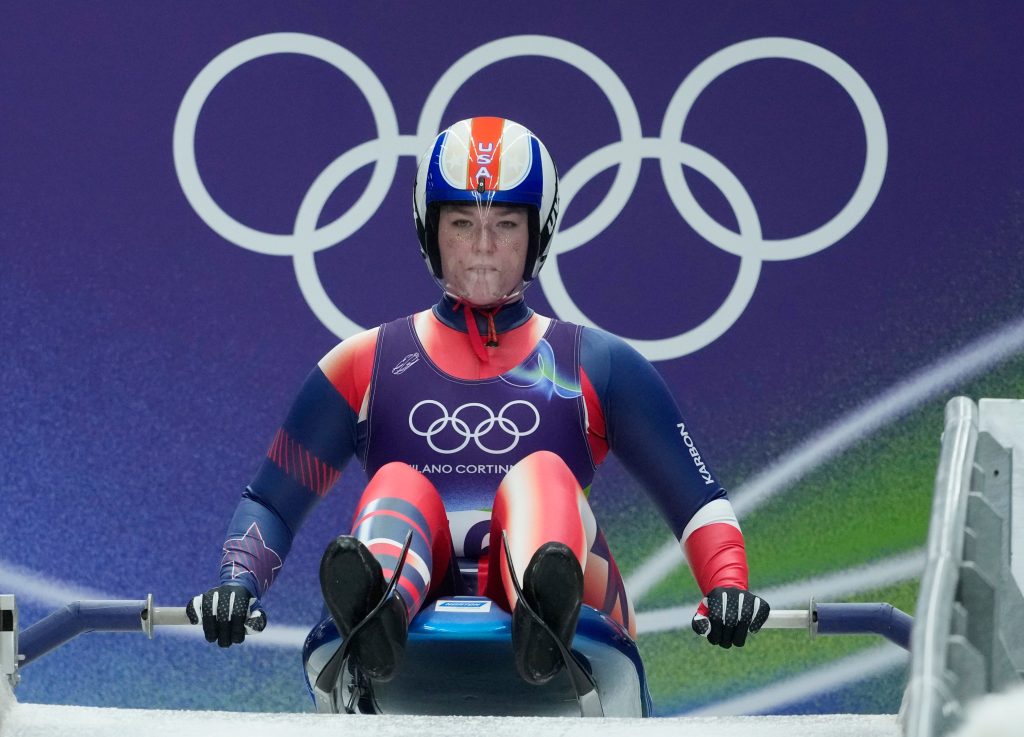
CORTINA D’AMPEZZO, Italy – Growing up in Park City, Utah, home of several sports for the 2002 Winter Olympics, Ashley Farquharson was surprised to learn not everyone in America knew what luge was.
Not every child grows up lying flat on their backs and sliding down an ice track feet first under six Gs of pressure?
As she’s gotten older, Farquharson has realized her experience was the unique one. With access to the same venues used in 2002 and after school programs like the Youth Sports Alliance (YSA), 41 Park City athletes are competing in the 2026 Winter Olympics. Farquharson, 26, said she’s part of the first generation to benefit from 2002’s legacy.
Looking ahead to 2034, when the Olympics return to Utah, Farquharson is passionate about making winter sports more accessible. Team USA’s third women’s luge medalist could be anywhere right now. So, what does increasing accessibility to winter sports look like?
“It looks like dismantling systems that have monetized it for their own personal gain,” Farquharson told USA TODAY. “Not only is it becoming inaccessible because of climate change and because of capitalism, but also because kids are being forced to specialize so early. So there’s a lot of components that go into it, but I want youth to know that if they want to pursue a sport, it will be possible for them, and it should be fun for them.”
A 2015 study out of Harvard defines sport specialization as “year-round training (greater than 8 months per year), choosing a single main sport, and/or quitting all other sports to focus on 1 sport.” The same study found that specialized training in young athletes leads to increased risk of injury and burnout.
A 2020 study in the Orthopaedic Journal of Sports Medicine found highly specialized athletes had 1.72 times greater odds of injury. Johns Hopkins Medicine reported that an estimated 70% of young athletes quit organized sports by age 13, and athletes who specialize at a young age are at risk of mental health problems like depression, stress, anxiety, unhealthy perfectionism and associating winning with self-worth. The American Academy of Pediatrics’ recommends delaying specialization until late adolescence, or 15-16 years old.
That’s about the age Farquharson decided to take luge more seriously, leaving behind a promising softball career in favor of Olympic pursuits. “I did love softball,” she said. “I do miss it still.”
Coaches told her she could’ve earned a college scholarship, but her family reminded her she could go to college whenever. She’s currently pursuing a business degree from Purdue.
“Don’t let the idea that you have to go to college right now hold you back from something potentially greater,” they said.
Farquharson wants athletes to know specializing any earlier than 15-16 would risk damaging their bodies before they have a chance to grow into them.
“When you’re a kid, you’re still developing every possible form of athleticism, right? It’s not like you need to have super fast sprints when you’re 7. You don’t even have legs yet!
“So I guess I would just say that it’s OK to not be good at something and still enjoy it. It’s OK not to be good at something and still want to pursue it. And it’s OK to do more than one thing.”
Skeleton Olympian Mystique Ro broke it down in aGoFundMepost last month.
Each season, she wrote, costs “well over $25,000.” Logistics – such as flights, rental cars, lodging – around $12,000; Training – gym fees, sliding fees and race fees – around $6,000; Nutrition – supplements and food – around $5,000-$7,000; and equipment, more than $11,000.
“There are pieces of our sled (runners) that cost $700-1,000 per set,” she added. “One training run down the track costs, on average, 45 euro/trip.” As the top-ranked U.S. skeleton athlete regardless of gender, Ro posted on TikTok in July that she received a team-high stipend of $2,250 per month, or $27,000 per year.
Then there’s climate change. A 2024 study published in Current Issues in Tourism found that of 93 past and potential Winter Olympics and Paralympic host cities, only 52 would be reliable for the Games. Even if countries live up to their policies and pledges, which isn’t guaranteed.
All the more reason Utah’s existing infrastructure is crucial for Team USA’s Winter Olympic pipeline. The same way NCAA sports are touted as a feeder system for the Summer Games, YSA’s Get Out & Play and ACTiV8 programs give children in Park City the opportunity to try winter sports. More than 3,200 children participate annually, up from 800 when YSA first began after the 2002 Games.
Seven athletes competing in 2026 participated in YSA’s Get Out & Play program or received direct funding from the alliance. Another 17 came up through YSA-affiliated clubs.
Farquharson has been sliding since age 11, having enrolled in YSA while attending Ecker Hill Middle School. Now she’s part of the White Castle USA Luge Slider Search, the program’s largest national recruiting effort established in 1985 to extend luge’s reach. Athletes age 10-13 are targeted and taught positioning, steering and stopping on wheeled sleds at stops around the country.
Those who show the most promise are invited to Lake Placid, New York; Muskegon, Michigan; or Park City for an opportunity to slide on ice and be selected to the next year’s development team.
As far as her participation in a home Games eight years from now, Farquharson said she “can’t rule it out,” though competing at 34 “feels like a big ask.
“It would definitely be a very cool full-circle moment for me.”
Reach USA TODAY Network sports reporter Payton Titus at ptitus@gannett.com, and follow her on X @petitus25.