Sleep secrets of Olympians. How Team USA stays well-rested in Milan
- The U.S. Olympic and Paralympic Committee identified sleep as a key area to support athlete health and performance.
- Team USA created a program to educate athletes on sleep needs, addressing factors like travel, training, and jet lag.
- Athletes like Chloe Kim and Lindsey Vonn emphasize the importance of adequate sleep for mood, recovery, and performance.
LIVIGNO, Italy – Don’t sleep on Team USA.
Unless, of course, you’re one of the athletes representing the United States at the 2026 Milano Cortina Winter Olympics. In that case, catching some ‘Zs’ is a priority – one the U.S. Olympic and Paralympic Committee has prioritized ahead of these Games.
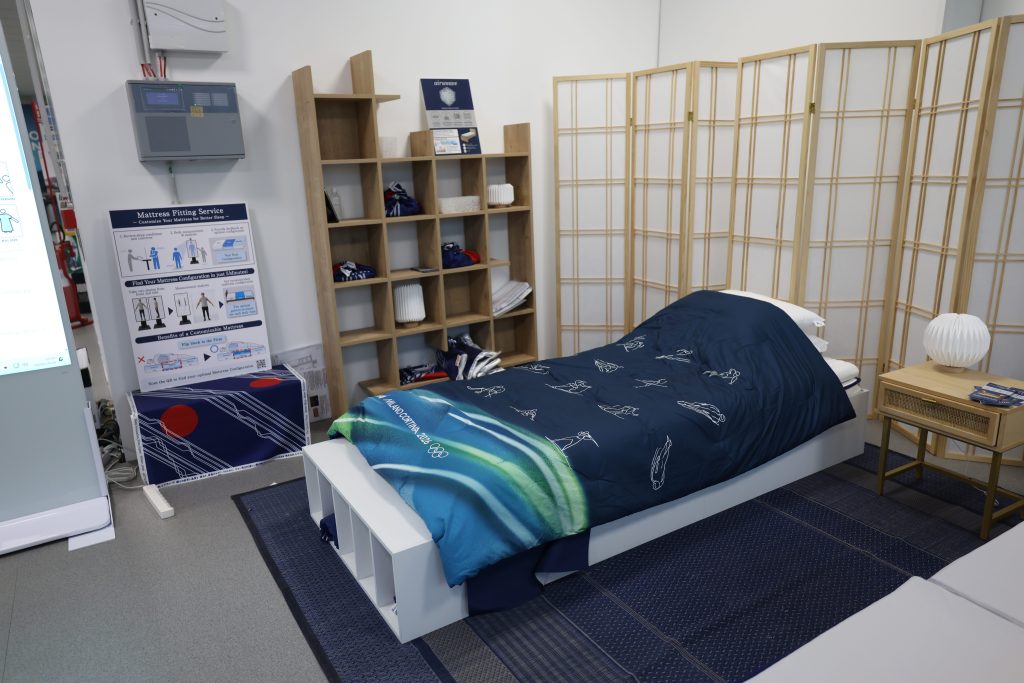
About two years ago, Team USA performance and medical staff identified sleep as an area in which the USOPC could continuously support athlete health, said senior psychological services provider Dr. Emily Clark. Around that time, during the 2024 Paris Olympics, athletes complaining about ‘cardboard beds’ at the Olympic Village went viral on social media. One athlete even said he brought his own bed.
‘There was some low-hanging fruit that we were really wanting to build robust supports around,” she said.
That prompted leadership to create an interdisciplinary working group of providers across sports sciences and sports medicine. They studied different times athletes relayed they struggled with sleep. They opened dialogues with athletes to learn more.
‘Sleep is something that we know it’s really pivotal for health or performance for recovery, and yet many Olympic and Paralympic athletes really struggled with sleep disruption at different times for a number of sport and non-sport related factors,” Clark said. ‘So our goal was really to help athletes be able to understand their sleep needs with depth and then be able to make sound decisions across the number of the contexts that they operate within.’
Count snowboarder and two-time Olympic gold medalist Chloe Kim as someone who definitely wants her nightly eight hours.
‘I’m a good sleeper. I am also dependent on sleep,’ Kim told USA TODAY Sports. ‘If you catch me in a bad mood, it’s probably because I didn’t get eight hours. That’s like my minimum requirement for a functional, productive day. I always try to get eight hours, but you know, stuff happens. It doesn’t always work out. On those days I just try to lock myself away and try to get a nap in and try to reset.
“But yeah, sleep is very important for a lot of different reasons. I find I’m a lot moodier when I don’t sleep well. My body doesn’t feel good. I’m not recovered. There’s so many things. But yeah, big, big fan of sleep over here.”
Many factors, as Kim said, impact sleep. Travel, parenting and training loads are three examples of the non-sport and sport factors the sleep-study group examined and addressed. Scaling the resources, and then making that all available to every athlete, was the next step. Team USA piloted the sleep program for Paris and repeated it, with some improvements, for Milan, Clark said.
Starting early ahead of Milan was key to stabilizing and refining an athlete’s sleep based on their contextual demands, she added.
“And then help them prepare for getting to the game so that when they arrive, they’re well rested, right?” Clark said.
Rest is one component of sleep though. Mood stability, cognitive function, emotional stability and resilience to illness are all things that can greatly affect an athlete’s experience at an Olympics.
Prior to tearing her ACL, Lindsey Vonn said the main reason she wouldn’t attend Friday’s opening ceremony was because the travel time would negatively impact her sleep.
‘It’s almost physically impossible for me to do that unless I just don’t sleep,” the 41-year-old said. “At my age, I kind of need it.”
Team USA rolled out a broad-based process, starting with sports-specific education for teams and coaches. A dietician is part of the sleep-study group, an example of the holistic approach. But then targeted the individual for maximized results. Doctors screened for sleep disorders. Next was asking about an athlete’s beliefs, behaviors, environment and biology, as Clark put it, ‘to really target what their goals for sleep are based on whatever their specific needs are.’
Sometimes, for speedskater Jordan Stolz, he needs a nap between qualifying and finals, especially if there is an extended gap. He said the last thing he wants to do is wait around the rink and hear another competitor’s qualifying.
‘I’d rather be in my bed laying down and sometimes I do that,’ he said. “If the hotel is really close to the rink, I’ll just get a ride back and go to sleep and then come back an hour before.’
The good news for Stolz is Team USA has published extensive literature, available to the public, about all types of best-sleep practices. To tackle jet lag, there are sections for how to prepare (shifting the sleep schedule in 30-60 minute intervals to match the new time zone), what to do while traveling (stay hydrated) and how to adjust in the new location (take 20-90 minute naps and prioritize sunlight).
Also available to athletes is a sleep diary outline. On the sleep webpage is a ‘myth busting’ section, which explains why napping isn’t bad for athletes and why they don’t need to compensate after one poor night’s rest. The ‘eight hours’ threshold – nobody tell Kim – is caveated with the following:
‘Getting enough hours of sleep is generally important for performance, but one night of poor sleep is rarely enough to derail your performance when you have adrenaline on your side and good sleep banked from prior nights.’
Many of the U.S. ski and snowboard athletes trained and competed in Europe during the World Cup season prior to the Olympics, making the jet-lag transition minor compared to some of their teammates coming from the U.S., particularly those traveling from the West Coast.
‘I’ve got a good routine,’ said alpine skier Paula Moltzan. ‘I think going to Europe is easy, honestly, if you can get a couple of hours of sleep on the plane, I have never been crazy affected by jet lag.
‘We’ve always had a crazy schedule. It’s never that convenient. We do a lot of travel compared to most sports and it’s just kind of the name of the game.’
Team USA partnered with Saatva this year to provide mattress partners to each athlete staying in their respective village, Clark said.
‘Hopefully the beds will provide that environmental support,’ Clark said. ‘And then the other thing that we really tried to work on in advance of Milan is supporting the ecosystem around the athletes. So if we can also give this education and environmental support to staff, they are more likely to provide high-level support for Team USA athletes in any scenarios and environments.’