Inside cross-country skier Jessie Diggins’ final Olympics mindset
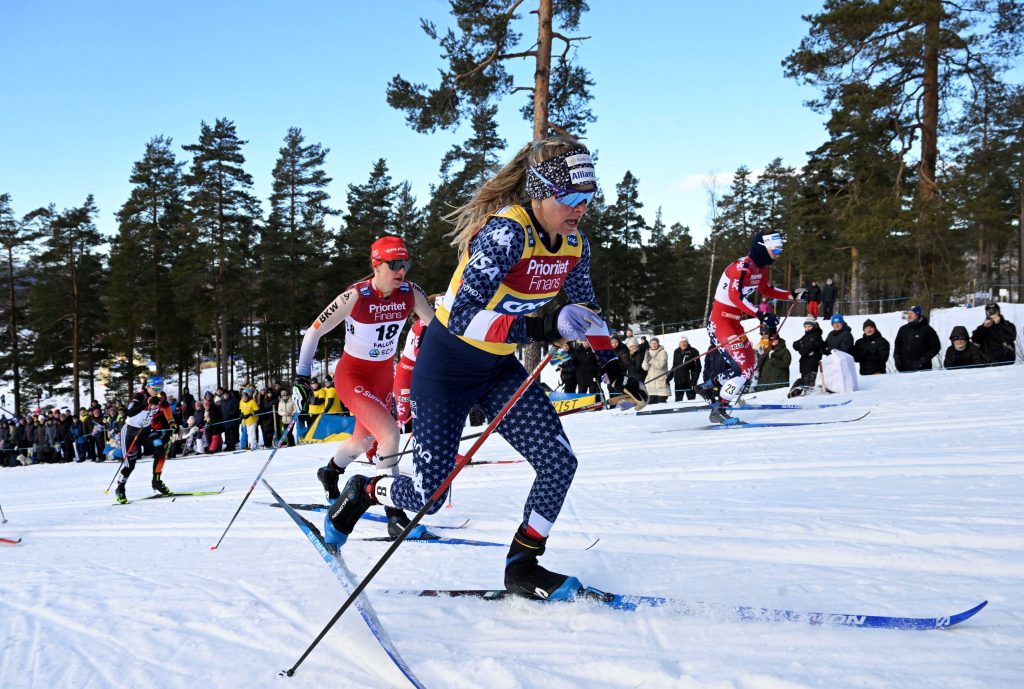
- Jessie Diggins, the most decorated U.S. cross-country skier, will retire after this season.
- Diggins keeps her three Olympic medals in tote bags rather than displaying them at home.
- She focuses on the joy of skiing, not results, and wears glitter as a pre-race ritual to remind her of her why.
- Diggins has been a vocal advocate for mental health after her own recovery from an eating disorder.
Diggins’ team sprint win at the 2018 Pyeongchang Olympics with teammate Kikkan Randall was the Team USA’s first gold medal in cross-country skiing. Her bronze medal finish in individual sprint at the 2022 Beijing Games made Diggins the first American to win an individual cross-country skiing medal. Her silver in the 30k freestyle in Beijing completed her set.
Yet the hardware that earned her a place in the annals of history are not displayed in her home. ‘That’s actually for a very specific reason,’ Diggins told USA TODAY Sports ahead of the 2026 Winter Olympics in Milano Cortina, the fourth and final Games of her prolific career.
Diggins’ three Olympic medals are tucked away in tote bags that make it easy to transport to school visits and show-and-tells. They are symbols of her success, but Diggins said she rarely looks at them because she doesn’t want to become complacent or satisfied. She wants to stay in the moment.
Get Olympics updates in your texts! Join USA TODAY Sports’ WhatsApp Channel
‘I never take them out. They’re not on display … It’s because I want to wake up every single day and go do something that makes me feel proud of how hard I work,’ Diggins said. ‘Having Olympic medals, that was three different, amazing days, but it doesn’t give you this hall pass for life.’
In November, Diggins announced this season will be her last on the trails. She plans to finish her career on home soil at the World Cup Finals in Lake Placid, New York, in late March following the 2026 Games. Knowing this will be her last Olympics makes the opportunity ‘even more special,’ she said.
‘I’ve tried to see every Olympics just that way,’ Diggins added. ‘This is the only time that I will ever be here like this, at this point in my life with these feelings and emotions and this scenario. And so it’s so special. I really want to enjoy that.’
Jessie Diggins chasing joy, not results
Becoming an Olympian was always a dream for Diggins. Her passion for skiing dates back to her early days of riding in a backpack on her father’s back as her parents skied every weekend. ‘Some of my formative memories (are) pulling on my dad’s hair and yelling at him to go faster,’ she said with a smile. Diggins instantly fell in love with the speed of downhills, but also appreciated the climbs. ‘It never felt like training or practice,’ she said.
Following along with the cross-country skiing wasn’t as easy as it is now. With no social media and her dialup internet rendered useless in their isolated home in the woods, her father, Clay Diggins, got creative with film.
‘My dad had VHS tapes of old Olympic races and he would put it on … our old giant box TV in the basement,’ she said. ‘It was really cool to see people just working really hard racing. I would ask questions and be like, ‘What’s an individual start? Why is it important? How do they push themselves so hard?’ And it was fun to have that moment to connect with my dad and watch the races in that way.’
Get our Chasing Gold Olympics newsletter in your inbox for coverage of your favorite Team USA athletes
Diggins immediately gravitated toward Olympic gold medalist Beckie Scott, who became her ‘first-ever hero’ after Scott made history as the first Canadian to medal in cross-country skiing at the 2002 Salt Lake City Games. It wasn’t winning that captivated Diggins — it was Scott’s infectious energy.
‘She had the biggest smile and that was why I liked her, not because she won,’ Diggins said. ‘I just love that she seemed so happy and joyous and it seemed like, ‘Oh, that’s someone who loves what they do.”
Joy is what Diggins chases on the trails, not results, even though success has followed. You can tell how happy Diggins is based on the amount of sparkles on her face. It’s a pre-race ritual she’s done for as long as she can remember.
‘Putting glitter on and the sparkles before a race … it’s a reminder, I get to do this. I love skiing, I love challenging myself. I love going out there and putting it all out there, and I’m doing this for me,’ she said. ‘I used to feel so much pressure and expectation. I would get so jittery and so nervous that it was stealing the joy out of what I was doing. Well, you can’t be too serious when you have glitter all over your face.’
Expect lots of sparkles — biodegradable, of course, which matters to Diggins, a climate change advocate — at these Games. Diggins hasn’t decided on a color just yet, although she’s been feeling metallics lately and may try to match her racing suit. ‘Who knows, I’m bringing options,’ she said.
Longevity starts with fundamentals
Diggins’ 2025-26 World Cup season got off to an unexpected start. The reigning overall World Cup champion broke her pinky toe after stubbing it on the couch in October, 100 days out from the Milano Cortina Games.
‘With all the things I do for sport and for training, I am taken down by a piece of living room furniture,’ she joked.
Diggins has fully recovered from what she called a ‘ridiculous’ injury and hasn’t missed a step in her Olympic preparations, which have largely remained the same throughout her 15-year career. She likes to focus on the basics — ‘Doing them well, doing them with consistency and doing it over time.’ Her process-oriented mindset, in addition to the ‘wonderful’ team behind her, has helped Diggins avoid burnout and stay grounded.
‘The Olympics is just one more day in that training progression,’ she said. ‘Same as every other day for the last 15 years. You show up and you do the best you can. And maybe that means you win an Olympic medal and maybe it doesn’t fall that way. And that’s OK. You still did the best you could and you can and should be proud of that.’
Diggins said her 10-year-old self would be proud of all she’s accomplished. So would the 18-year-old dreamer who watched the 2010 Vancouver opening ceremony at a sleepover with her high school teammates. Diggins’ childhood dream became a reality when she made her Olympic debut in Sochi in 2014 at age 22.
‘It was a pretty surreal, almost out of body experience,’ said Diggins, whose best result in 2014 was a seventh-place finish in the 4×5km relay. ‘When I was 22, I definitely wasn’t going in with any pressure. No one was watching. There was really no expectations settled on my shoulders, and that was a beautiful, wonderful gift … It was about taking it in and now it’s more about the high performance.’
‘Mental health is human health’
Mental preparations are as important as physical preparations, a message Diggins wants to spread following an eating disorder and recovery. Through her treatment at The Emily Program, Diggins discovered her eating disorder was a ‘coping mechanism for stress and perfectionism’ she placed on herself.
Diggins hopes her vulnerability on and off the snow can inspire others to be brave enough to not only follow their passions, but also face their own struggles. It’s a legacy Diggins wants to leave behind when she hangs up her skis.
“I hope I’m remembered not just for the pain cave and ability to suffer deeply for a team that I love and a sport I care about so much, but for the joy, sense of fun on snow, heart-on-sleeve racing, deep vulnerability and openness that I’ve brought to everything I do,’ she said in her retirement announcement on Nov. 19.
Follow Cydney Henderson on Twitter @CydHenderson
The USA TODAY app gets you to the heart of the news — fast. Download for award-winning coverage, crosswords, audio storytelling, the eNewspaper and more.