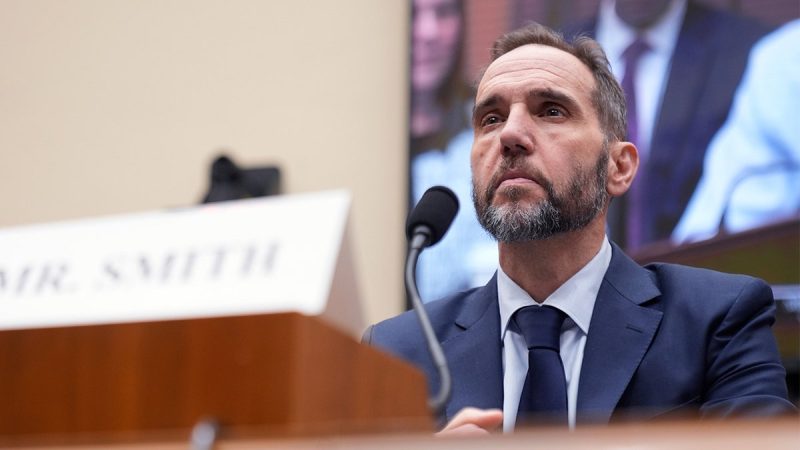
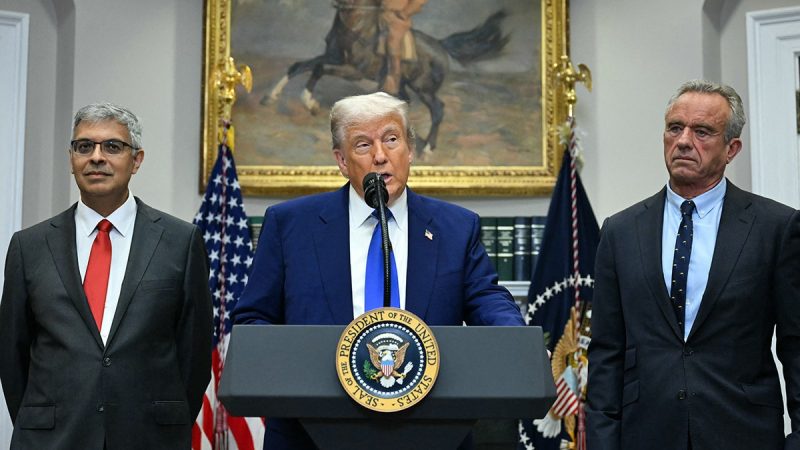
House jams Senate by attaching repeal of Jack Smith provision to $1.2T funding package
The House of Representatives is moving to jam the Senate by attaching a repeal of the upper chamber’s Arctic Frost repayment measure to a funding bill that’s key to averting a partial government shutdown.
A Senate GOP-led measure allowing Republicans in the upper chamber to sue the federal government for up to $500,000 if their phone records were seized by ex-Special Counsel Jack Smith is still causing heartburn in the House.
House lawmakers voted unanimously Thursday to roll back that measure, as an amendment to a $1.2 trillion federal funding package that’s expected to get a vote later in the day.
If the funding package is passed, the Senate will be forced to consider the repeal along with the larger spending bill or else amend it and risk running the clock down on Congress’ Jan. 30 government shutdown deadline.
The Senate GOP-led measure was included as part of a wider government funding package that ended the longest-ever shutdown in U.S. history last November.
Its inclusion caught many House Republicans by surprise, angering them for its use of taxpayer dollars to benefit a relatively small contingent of lawmakers.
A House vote on repealing the measure late last year similarly passed via a unanimous vote but was never taken up in the Senate.
‘The leadership was worried about them rejecting it, but let them own it if they want to object to it,’ Rep. Ralph Norman, R-S.C., who called the measure ‘ridiculous,’ told Fox News Digital on Thursday.
It will now be part of the overall funding package sent to the Senate, which provides dollars to keep the Department of War, Department of Education, Health and Human Services Department, and Department of Homeland Security, among others, running for the remainder of the fiscal year.
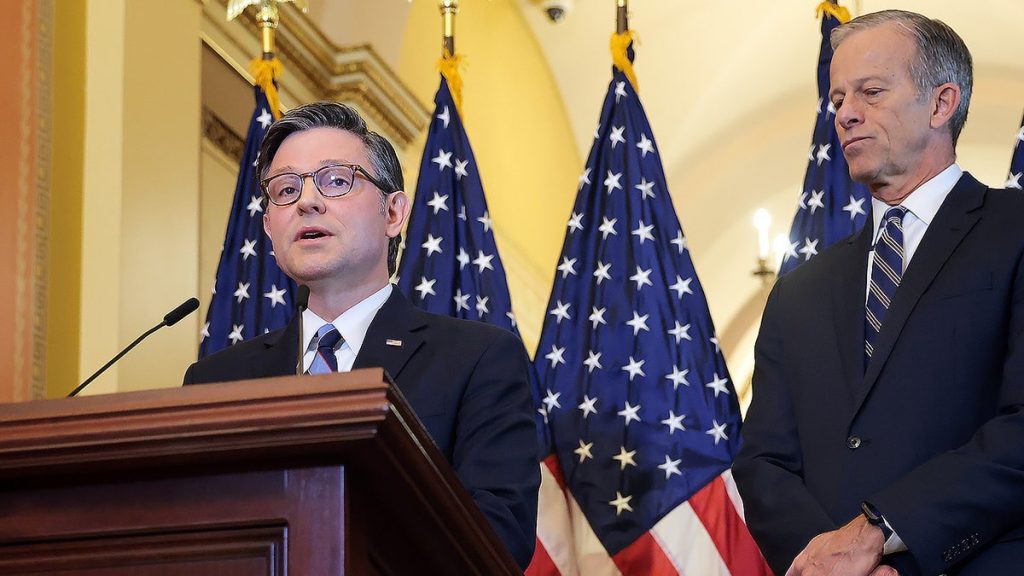
Senate Majority Leader John Thune, R-S.D., with a green-light from Senate Minority Leader Chuck Schumer, D-N.Y., added the tweak to the previous year’s spending deal during bipartisan talks to end the 43-day government shutdown.
Since then, congressional Republicans and Democrats alike have banded together to nix the provision, dubbed ‘Requiring Senate Notification for Senate Data.’
It would explicitly allow only senators directly targeted in Smith’s Arctic Frost investigation to sue the U.S. government for up to $500,000.
Thune at the time reasoned that members were effectively ‘spied on’ by the DOJ, and that the very act itself ‘demands some accountability.’
‘I think that in the end, this is something that all members of Congress, both House and Senate, are probably going to want as a protection, and we were thinking about the institution of the Senate and individual senators going into the future,’ Thune said.
Still, that has not stopped lawmakers in the upper chamber from trying to nuke the law. Several attempts have been made over the last few months to gut it on the Senate floor, and each has been blocked by Sen. Lindsey Graham, R-S.C., the strongest proponent of the provision.
Sen. Gary Peters, D-Mich., tried once again to get rid of the Arctic Frost law last week before the Senate left Washington, D.C., for a weeklong break.
‘That policy is simply wrong,’ Peters said on the Senate floor. ‘And it goes against everything that we’re supposed to be doing as elected representatives to make life better for the people who live in our states and in the country.’
But, his attempt was once again blocked by Graham, who contended that his rights when he was not notified that his records, along with seven other senators, had been violated as part of the probe.
‘If you cannot hold your government accountable for violating your rights or potentially violating your rights, you have a very dangerous government,’ Graham said on the Senate floor. ‘I am no better than anybody else, but I’m certainly as hell no worse than anybody else.’
The repeal provision’s inclusion in Thursday’s government funding bill caught many by surprise. It had not been part of the legislation when it advanced out of the House Rules Committee, and was only offered by Committee Chairwoman Virginia Foxx, R-N.C., on the House floor shortly before voting began on a procedural hurdle called a ‘rule vote.’
It will be sent to the Senate along with the wider funding package if it’s passed by the House on Thursday afternoon.