How US Olympic figure skating team was picked for 2026 Games
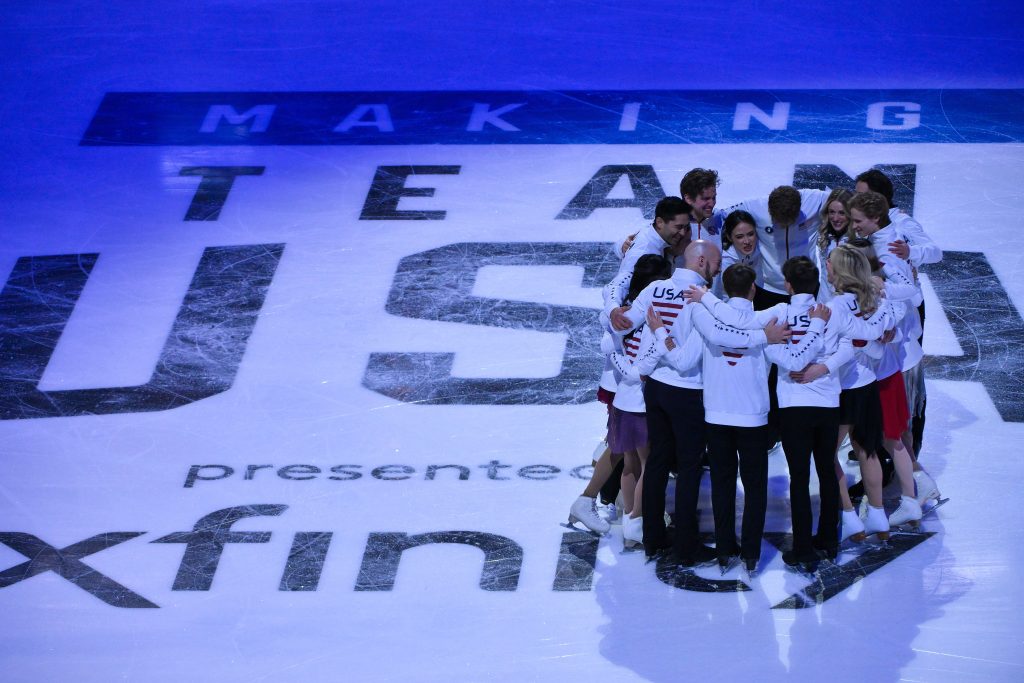
- U.S. Figure Skating has officially named the 16 skaters who will represent Team USA at the 2026 Winter Olympics.
- The selection committee considered each skater’s body of work, with the most weight given to their performance at the national championships.
- While some selections were straightforward, the men’s team saw veteran Jason Brown named as an alternate after a difficult free skate.
- Citizenship issues prevented two pairs teams who finished on the podium at nationals from being selected for the Olympic team.
ST. LOUIS — U.S. Figure Skating had to weigh every possible scenario when determining which 16 skaters would represent Team USA at the 2026 Winter Olympics.
Its selection committee met to deliberate after each discipline finished their final segments at nationals. Committee members considered each skater’s recent body of work, reviewing data points and strength of performances. After two days of deliberations, joyous reveals and tough conversations, U.S. Figure Skating made official its roster, a group of athletes poised for medal podiums in Milano Cortina.
“Every one of us can agree that we have some phenomenal athletes as part of Team USA going into Milan,” said Justin Dillon, USFS chief high performance officer.
The meeting for each discipline used up all alotted 90 minutes — the committee also selected who would compete at world championships and Four Continents — but that doesn’t mean every decision for the Olympic team was difficult. For example, the women’s team was straightforward with Amber Glenn, Alysa Liu and Isabeau Levito making it clear they were the trio after finishing with gold, silver and bronze at nationals, each smashing their short program and free skate. The same could be said for the top male skater in Ilia Malinin, who is the gold medal favorite in Milano.
The challenging decisions were around which two men would join Malinin.
Going into the weekend, veteran and fan favorite Jason Brown was penciled in for a spot. That changed after he struggled mightily in his free skate. The performance plummeted him all the way to eighth place and took him out of the running, landing him instead as an alternate.
“Jason Brown is beloved by our skating community. He is a fabulous athlete. That is somebody we’ve been able to celebrate for several competitions, performances, seasons, years, etc.,” Dillon said. “Everybody was held to the same standards of the selection procedures.”
As a result, the final two spots went to Andrew Torgashev and Maxim Naumov, who finished second and third, respectively, at nationals. USFS uses the past two seasons to determine who gets the nod, but Dillon noted the U.S championships is “the one that is weighted the most heavily.”
Torgashev put on an impressive free skate that rocketed him from fifth in the standings after the short program to second overall with 267.62 points. Naumov turned in an emotional short program and a solid enough free skate to total 249.16 points.
“We went through the list from top to bottom of anybody that was in contention or was eligible to arrive at the conclusion we did,” Dillon said.
The decision on the three ice dance pairs followed the same pattern. Seven-time champions Madison Chock and Evan Bates were the obvious selection with the other podium teams — Emilea Zingas and Vadym Kolesnik, Christina Carreira and Anthony Ponomarenko — earning the two other spots.
Pairs was more complicated. The back-to-back champions Alisa Efimova and Misha Mitrofanov didn’t qualify because Efimova, from Finland, didn’t obtain her U.S. citizenship in time, despite a last ditch effort to do so.
On Friday, USFS CEO Matt Farrell said the pairs selections would be determined Saturday morning and that Efimova needed her citizenship approved by the time the meeting ended or they would not be selected. Ultimately, the uncertainty took them out of the conversation.
“That process is a very long, complex, inexact science, and at the end of the day, there was just not anything tangible enough to make it feel real, even up to the last second, despite heroic efforts from a lot of different parties,” Farrell said.
Second place Ellie Kam and Daniel O’Shea earned an Olympic berth alongside fourth place Emily Chan and Spencer Akira Howe, who had a strong free skate propel them up the standings.
Chan and Howe, who finished fourth at nationals, earned the Olympic spot over the third-place team of Katie McBeath and Daniil Parkman because Parkman, from Russia, didn’t have American citizenship. Dillon noted Parkman wasn’t as close to obtaining as Efimova.
“McBeath and Parkman are just starting that process, so they knew coming into this that was not a consideration,” he said.
After all the debates and meetings and discussions came the new part of the process: Telling the athletes of the decision. Previously, they received the news via email or text, but officials felt this warrants a more personal touch.
This year, they brought in the skaters to hear the news in person, both those who made it and those who didn’t. The men were the final group to learn their fates, those conversations happening mid-Sunday morning in St. Louis, about three hours before the team was publicly revealed.
There are many phenomenal aspects of the people who make up this team, and the last few days have brought some memorable moments to make this Olympic send-off truly special.
“It’s just as good as it gets for the future of the sport,” Farrell said. “All eyes can be on an Olympic team for the U.S. that will make all of us so proud.’